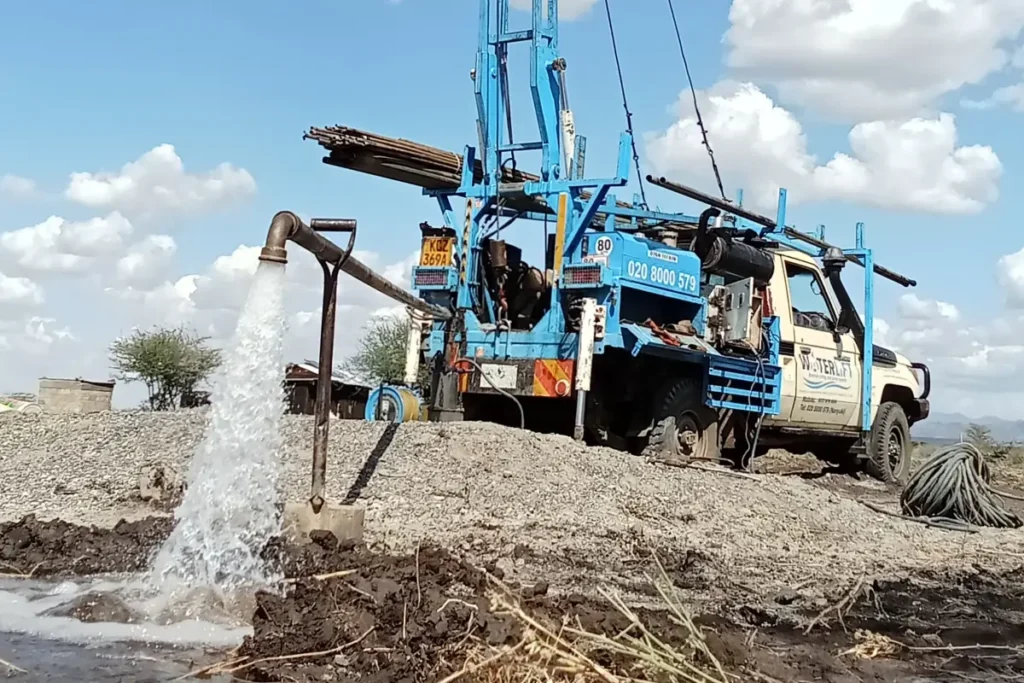
Drilling a successful borehole is only the first step. Water quality determines whether that borehole becomes a reliable long-term asset or a constant maintenance challenge.
Two of the most common groundwater issues in Kenya are excess iron and high fluoride levels. Both require specialized treatment and different technical solutions.
Understanding Iron in Borehole Water
Iron is naturally present in many aquifers, especially in weathered rock formations, swampy zones, and basement complex geology.
Signs of high iron include:
– Brown or reddish water
– Metallic taste
– Staining on sinks and tiles
– Clogged pipes and pumps
– Slime buildup in storage tanks
While iron is not usually a severe health risk at moderate levels, it causes infrastructure damage, reduced pump efficiency, and increased maintenance costs.
Iron Removal Techniques
1. Aeration and Sand Filtration
Water is exposed to air to oxidize dissolved iron into solid particles, which are then removed through filtration media.
2. Manganese Greensand Filters
Specialized media coated with manganese dioxide removes iron, manganese, and hydrogen sulfide. Periodic regeneration is required.
3. Pressure Filtration Systems
Automated systems with backwashing capability are ideal for commercial and high-yield boreholes.
Understanding Fluoride in Borehole Water
Fluoride occurs naturally in volcanic and Rift Valley regions. While small amounts are beneficial, high levels can cause dental and skeletal fluorosis. The recommended safe level is approximately 1.5 mg/L.
Fluoride Removal Techniques
1. Activated Alumina Filtration
Water passes through alumina media that adsorbs fluoride ions. Media requires periodic regeneration.
2. Reverse Osmosis (RO) Systems
RO membranes remove fluoride, dissolved salts, heavy metals, and other contaminants. Requires proper maintenance and pre-filtration.
3. Bone Char Filtration
Used in some community systems for fluoride adsorption, though it requires careful management.
Why Water Testing Is Mandatory
Laboratory analysis determines iron concentration, fluoride concentration, pH level, total dissolved solids (TDS), and other contaminants. Proper system design depends on accurate water quality data.
Integrated Treatment Approach
In cases where both iron and fluoride are present, treatment should follow this sequence:
1. Iron removal
2. Sediment filtration
3. Fluoride treatment
4. Final polishing and disinfection
Conclusion
Water quantity is important, but water quality determines true value. Managing iron and fluoride protects infrastructure, public health, and long-term sustainability. With proper testing and correctly designed filtration systems, borehole water can meet safe and usable standards for decades.
Managing Iron and Fluoride: Specialized Filtration Techniques