
The Bursar’s Action Plan — Proven Strategies, Real Savings
waterliftsolarsavings.africa | Free Energy Audit for Schools
The KPLC bill sitting on your desk is not beyond your control — even if it feels that way.
Kenyan schools of every size are using proven, practical strategies to cut their electricity costs by 15%, 30%, and even 80%. Some of these strategies cost nothing. Others pay for themselves within months. And one can change a school’s finances permanently.
This article covers all of them, in order of ease and impact.
1. Understand Your Bill First
Before cutting costs, you need to know where they come from.
Most school administrators look at the bottom-line total and feel helpless. But a KPLC bill is a map.
For every KSh 10 in base energy charges, a school may pay KSh 20 to KSh 25 all-in once the Fuel Energy Cost Charge, Forex Adjustment, levies, and VAT are added.
That means every unit of electricity you save is worth far more than the base rate alone.
Two quick actions
Verify your tariff category.
Check with your KPLC district office to confirm that your school is on the correct electricity tariff. Some schools may have remained on a higher tariff than necessary for years.
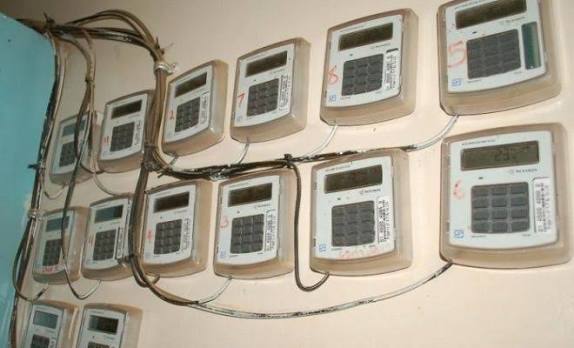
Install sub-meters.
Install sub-meters on major consumption areas such as:
- Kitchen
- Computer laboratory
- Dormitory blocks
- Administration blocks
- Water pumping systems
A 2026 UNEP study found that 78% of Kenyan secondary schools had no sub-meters, meaning they had no clear way of knowing which part of the school was consuming the most electricity.
A sub-meter costs approximately KSh 3,000 to KSh 8,000 and can begin revealing the answer within days.
2. Switch All Lighting to LED — The Fastest Payback
Lighting accounts for approximately 50% of electricity consumption in the average Kenyan school.
A 36-watt fluorescent tube uses about twice the electricity of an 18-watt LED tube while producing comparable light output.
A UNEP pilot project that replaced fluorescent lamps with LEDs in 100 Kenyan boarding schools achieved an average electricity bill reduction of approximately 24%, without changing anything else.
The average annual saving per school was approximately:
KSh 270,000
A full LED replacement for a medium-sized school can cost approximately KSh 150,000 to KSh 250,000, including labour.
Estimated payback period
Under 12 months at current KPLC rates.
Schools can reduce lighting costs further by installing:
- PIR motion sensors in toilets and corridors
- Timer switches on perimeter security lighting
- Automatic lighting controls in low-traffic areas
PIR motion sensors typically cost approximately KSh 800 to KSh 1,500 each and can provide additional savings at relatively low cost.
3. Tackle the Kitchen and Water Pumps
For boarding schools, the kitchen and water pumping systems together can account for approximately 35% to 55% of total electricity consumption.
Yet both areas are frequently overlooked when schools look for ways to reduce energy costs.
Solar Water Heating
Solar water heaters can eliminate a large portion of the electricity used for heating water in kitchens and ablution blocks.
A system sized for approximately 300 to 500 students may cost between:
KSh 180,000 and KSh 350,000 installed
Estimated payback period:
8 to 14 months
Solar Borehole Pumping
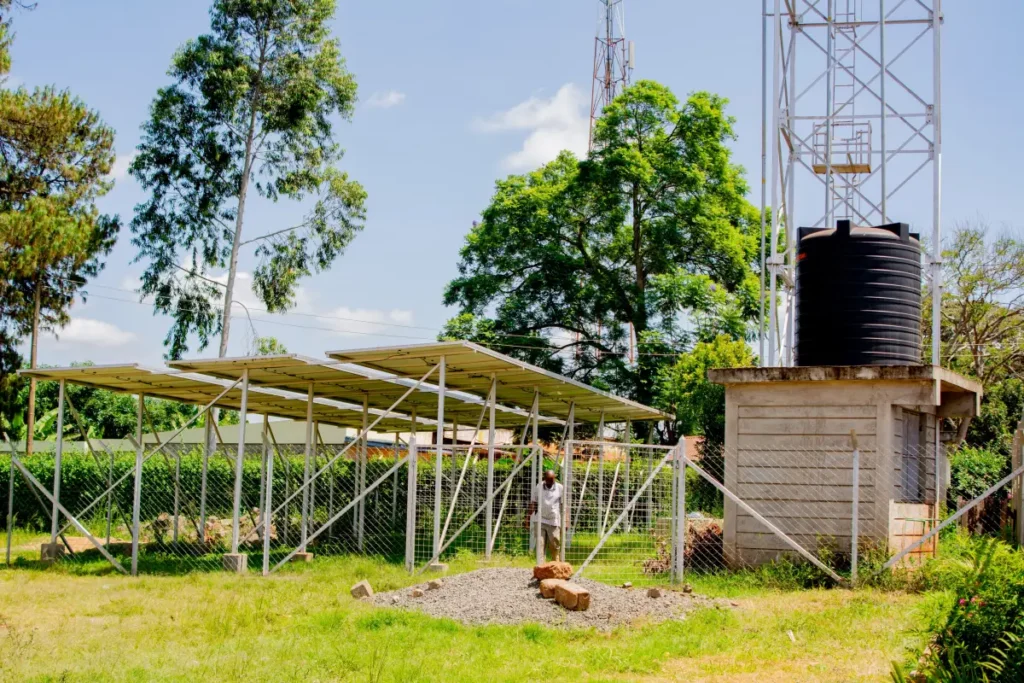
Solar borehole pumping systems use dedicated solar panels to pump water during daylight hours and store it in elevated tanks for use throughout the day.
Typical system cost:
KSh 150,000 to KSh 350,000
Estimated payback period:
1 to 2 years
After the investment has been recovered, both systems can operate at very low energy cost for many years.
Two no-cost actions while planning the investment
- Put kitchen boilers on timers so they heat water only during actual demand periods.
- Schedule borehole pump operation to avoid unnecessary operation and reduce total grid electricity consumption.
4. Manage Computers and Build an Energy Culture
A computer laboratory with 30 desktop computers and a projector can consume approximately 5 to 8 kWh every hour it operates.
A strict shutdown policy can make an immediate difference.
All computers should be fully powered off after the final class instead of being left running or on standby overnight.
This can reduce computer laboratory electricity consumption by approximately 15% to 25% at zero cost.
Schools should also enable automatic power-saving settings, including:
- Screen off after 5 minutes of inactivity
- Automatic sleep mode
- Full shutdown after the final lesson
- Projectors switched off immediately after use
Create an Energy Culture
Consider appointing a student energy prefect or energy team to conduct daily walkarounds.
Their responsibilities can include checking that:
- Lights are off in empty classrooms
- Computers are shut down after laboratory sessions
- Kitchen equipment is not left running unnecessarily
- Water pumps are operating only when required
- Outdoor lighting follows the correct schedule
Schools can also post monthly electricity consumption on a noticeboard alongside a savings target.
Visibility changes behaviour.
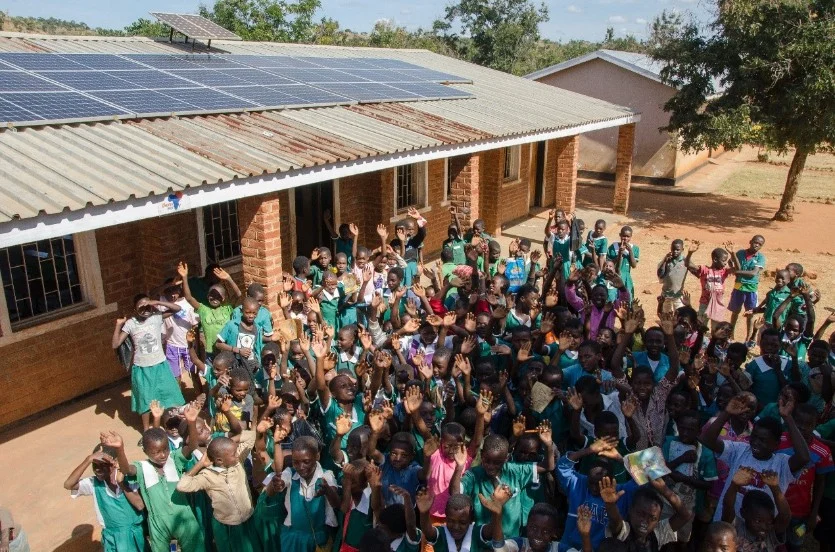
Under CBC, these activities can also support environmental education — creating both a curriculum benefit and a financial benefit.
5. Solar — The Move That Changes Everything
All the measures above can reduce your school’s electricity bill.
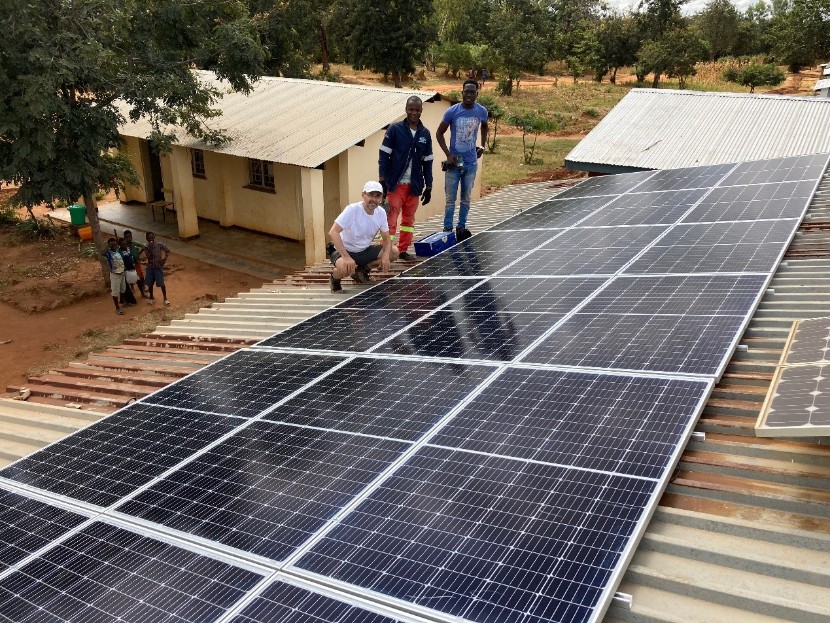
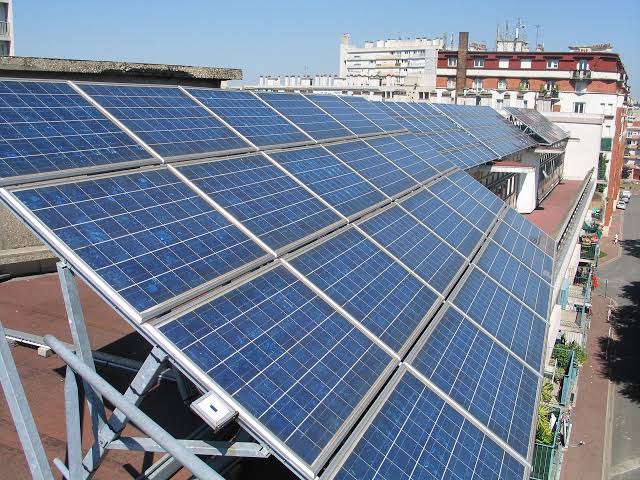
But for schools seeking to reduce electricity costs by 60% to 80% and maintain those savings over the long term, solar energy can create the biggest transformation.
Friends School Kamusinga in Bungoma County was spending approximately KSh 4.3 million per year on electricity in 2024.
After installing a hybrid solar system in February 2025, the school reported that its energy costs dropped by nearly 80%, representing potential annual savings of more than KSh 3.4 million.
“In 2024, our electricity bill reached KSh 4.3 million. After installing solar in February 2025, our energy costs dropped by nearly 80%.”
— Chief Principal, Friends School Kamusinga, Bungoma County
The compounding effect is important.
A school that has already implemented LED lighting, solar water heating, computer shutdown protocols, and other energy-efficiency measures has a lower overall electricity load.
That means the solar system required to cover the remaining demand can be smaller and less expensive.
Every efficiency measure implemented before solar can therefore reduce the cost of the solar system installed later.
Estimated Savings by Intervention
| Intervention | Estimated Bill Reduction | Upfront Cost (KSh) | Estimated Payback |
|---|---|---|---|
| LED lighting | 15–25% | 100,000–250,000 | Under 12 months |
| Solar water heaters | 15–30% | 180,000–350,000 | 8–14 months |
| Computer power management | 3–8% | Zero | Immediate |
| Solar pumping | 5–15% | 150,000–350,000 | 1–2 years |
| Solar PV hybrid system | 50–80% | 500,000–4,500,000+ | 2–5 years |
| Combined approach | 70–85% | Varies | 2–4 years |
Financing Can Remove the Upfront-Cost Barrier
Schools do not always have to fund the entire solar investment upfront.
Financing options can allow schools to begin benefiting from solar while spreading repayments over several years.
KCB Clean Energy financing may be available to qualifying schools, while lease-to-own arrangements can provide another option for institutions that prefer not to take a conventional bank loan.
Where financing is structured appropriately, the goal is for the monthly electricity savings to offset a significant portion of the repayment cost.
This allows the school to improve its energy infrastructure without waiting years to accumulate the full capital required for installation.
What Waterlift Solar Savings Offers Your School
✓ Free school energy audit and site assessment
✓ Customised solar system design based on your actual electricity consumption
✓ KCB Clean Energy financing options for qualifying schools
✓ Lease-to-own arrangements with reduced upfront capital requirements
✓ Solar water heating solutions
✓ Solar borehole pumping systems
✓ Hybrid solar PV systems
✓ Professional engineering, installation, monitoring and after-sales support
✓ Nationwide project support
Start This Term — Every Month You Wait Costs Money
The electricity bill on your desk represents money leaving your school every month — money that could otherwise support teachers, textbooks, laboratories, ICT facilities, school feeding programmes, infrastructure and student services.
The strategies in this guide can be implemented progressively.
Start with what costs nothing:
- Review and understand your electricity bills.
- Confirm your KPLC tariff.
- Enforce computer shutdown procedures.
- Appoint an energy prefect or energy committee.
- Monitor electricity consumption every month.
Then move to quick-payback improvements:
- Replace fluorescent lighting with LED lighting.
- Install timers and motion sensors.
- Improve water-pumping schedules.
- Install solar water heating.
Finally, when your school is ready for the move that can permanently change its electricity costs, consider a properly designed hybrid solar energy system.
Every month you delay is another month of electricity expenditure that could potentially be redirected toward education.
Ready to Cut Your School’s Electricity Bill by Up to 80%?
Book your free school energy audit today.
waterliftsolarsavings.africa
Waterlift Solar Limited
Kenafric Business Park, Baba Dogo, Nairobi
Branch: Nanyuki