What Every Principal, Bursar, and Board Member Needs to Know in 2026
Walk into any Kenyan school on a weekday afternoon and you may find a familiar scene: a computer lab with screens dark, a science teacher waiting for the projector to come back on, or a boarding kitchen struggling through yet another unannounced blackout.
For many schools, KPLC outages are not just an occasional inconvenience. They interfere with learning, administration, food preparation, water pumping and digital systems.
Solar energy is changing that.
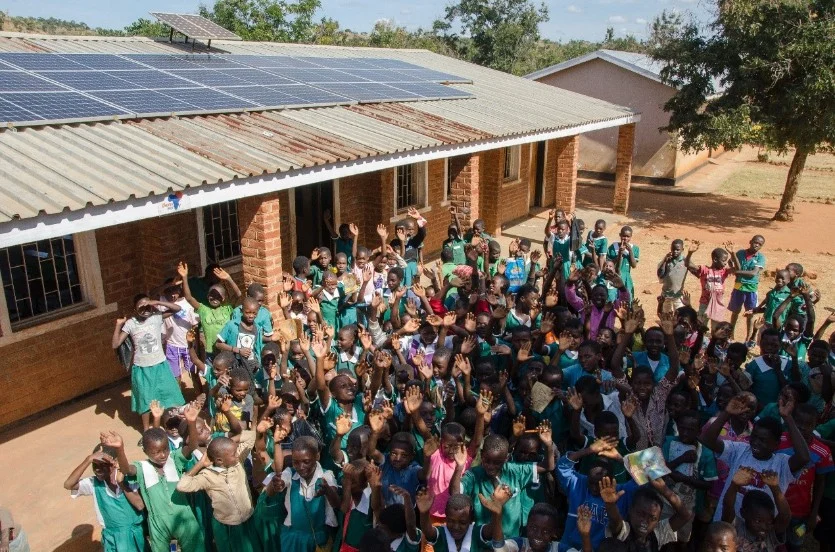
Schools across Kenya are increasingly turning to solar to reduce electricity costs, improve reliability and protect essential school operations from outages.
For principals, bursars and board members, the question is no longer simply whether solar works. The more important questions are: What system does the school need? What will it cost? How much can it save? And how can it be financed?
This guide explains the key things every school should know.
Why Schools Are Switching to Solar Right Now
Three major factors are driving the shift towards school solar systems.
1. Rising Electricity Costs
Electricity has become one of the largest recurring operational expenses for many schools.
A medium-sized boarding school can easily spend:
KSh 80,000 to KSh 200,000 per month on electricity
That translates to:
KSh 960,000 to KSh 2.4 million per year
For schools operating on tight budgets, that is money that could otherwise support teachers, textbooks, laboratories, ICT facilities and school infrastructure.
Solar allows schools to reduce the amount of electricity they purchase from the grid and gain more control over their long-term energy costs.
2. CBC Requires Reliable Electricity
Modern learning increasingly depends on electricity.
Schools need reliable power for:
- Computer laboratories
- Science laboratories
- Digital learning
- Projectors and smart displays
- Printing and administration
- SBA preparation and submission
- Internet connectivity
- Water pumping
- Kitchen operations
- Security lighting
When electricity is unavailable, these activities can be interrupted.
A properly designed solar system provides continuity during outages, helping the school maintain normal operations.
3. Solar Technology Has Become More Affordable
Solar technology has become significantly more affordable over the last decade.
At the same time, improvements in hybrid inverters, lithium batteries and remote monitoring systems have made school solar installations more reliable and easier to manage.
Kenya also benefits from strong solar irradiation throughout much of the year, making solar PV systems productive across most regions.
The financial case for solar is therefore stronger than it was a few years ago.
What a School Solar System Looks Like
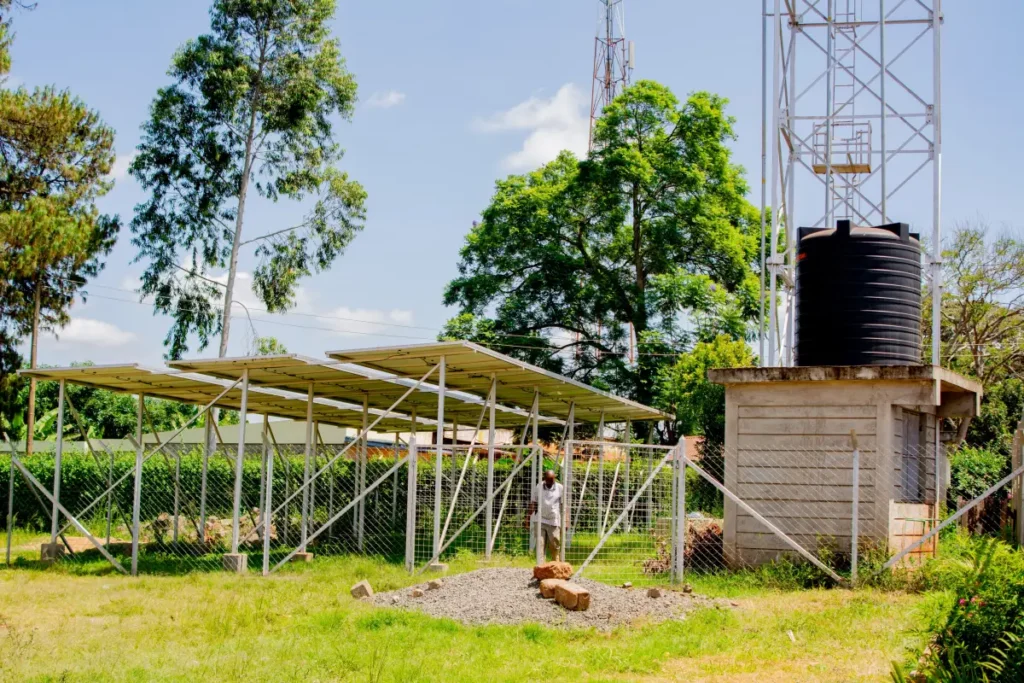
Most schools benefit from a hybrid solar system.
A hybrid system combines:
- Solar panels
- Hybrid inverter
- Battery storage
- KPLC grid power
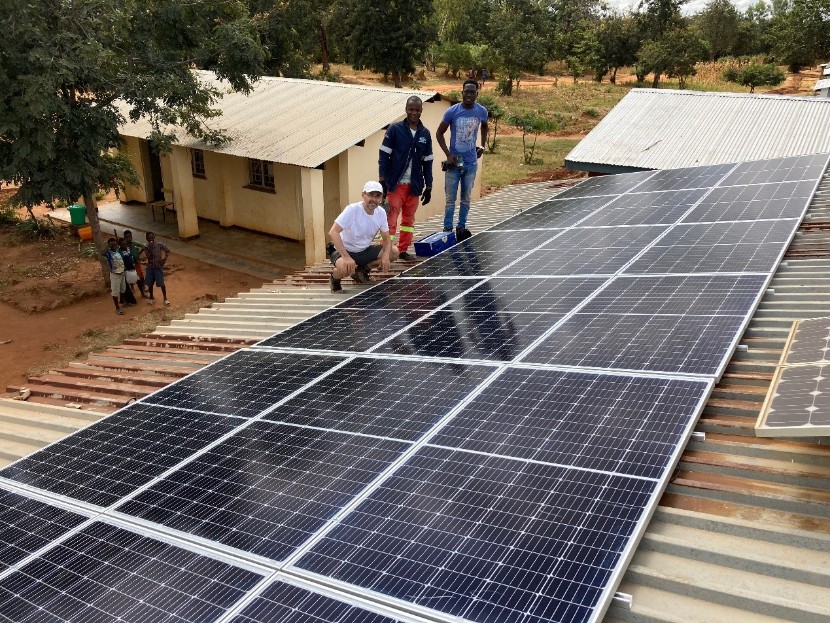
During the day, solar panels generate electricity for the school.
Any surplus power can charge the battery bank.
When KPLC goes off, the inverter automatically switches the school to battery and solar power.
Essential systems can continue operating without the delays associated with manually starting a generator.
A complete school solar system may include:
- High-efficiency monocrystalline solar panels
- Hybrid inverter
- Lithium battery storage
- Solar mounting structures
- Protection equipment
- Electrical distribution upgrades
- Remote monitoring
- Installation and commissioning
The exact system size should always be based on the school’s actual electricity consumption rather than an estimated package.
That is why a professional energy audit should come first.
What Solar Can Cost — and What It Can Save
Consider a boarding school with approximately 400 students currently paying:
KSh 140,000 per month to KPLC
A properly designed hybrid solar system could potentially reduce the monthly grid electricity bill substantially.
For example:
Current KPLC bill: KSh 140,000 per month
Possible residual bill after solar: KSh 25,000–35,000 per month
Potential annual savings: More than KSh 1.2 million
A suitable system could cost approximately:
KSh 2.5 million to KSh 3.5 million
Depending on consumption, battery requirements and financing structure, the investment may recover its cost over several years while continuing to generate electricity long after the payback period.
Indicative School Solar System Sizes
| School Type | Typical System Size | Estimated Cost (KSh) | Potential Monthly Saving | Indicative Payback |
|---|---|---|---|---|
| Small day school — below 200 learners | 5–10 kW | 500,000–900,000 | 25,000–40,000 | 2–3 years |
| Medium day school — 200–500 learners | 10–20 kW | 900,000–1,800,000 | 45,000–90,000 | 2–3 years |
| Small boarding school — below 300 students | 15–25 kW + battery | 1,500,000–2,500,000 | 60,000–100,000 | 2–3 years |
| Medium boarding school — 300–600 students | 25–50 kW + battery | 2,500,000–4,500,000 | 100,000–200,000 | 2–4 years |
| Large boarding school — 600+ students | 50 kW+ + battery | 4,500,000+ | 200,000+ | 3–5 years |
These figures are indicative only.
The actual system size and financial savings depend on:
- Historical KPLC bills
- Day and night consumption
- Boarding or day-school operations
- Computer laboratory usage
- Water pumping requirements
- Kitchen equipment
- Security lighting
- Battery backup requirements
- Available roof or ground space
A school should therefore avoid buying a solar package before an energy audit has been completed.
Solar Can Also Reduce Generator Costs
Many schools rely on diesel or petrol generators during power outages.
Depending on usage, generator fuel and maintenance can add another:
KSh 15,000 to KSh 40,000 per month
A hybrid solar system can dramatically reduce generator runtime.
This delivers additional benefits beyond the electricity bill:
- Lower fuel costs
- Less generator maintenance
- Reduced noise
- Fewer interruptions
- Protection from fuel-price fluctuations
- More reliable evening study
- Continuous ICT and administrative operations
For private schools, reliable electricity can also become part of the school’s value proposition to parents.
How Schools Can Finance Solar
One of the most common reasons schools delay solar installation is the upfront investment.
Financing can help remove this barrier.
KCB Clean Energy Financing
Qualifying schools may access KCB Clean Energy financing for solar projects.
Instead of paying the full system cost upfront, the school spreads repayment over several years.
The financial objective is for the electricity savings generated by the system to offset a significant portion of the financing repayment.
This means a school can begin benefiting from solar without waiting until it has accumulated the full purchase price.
Lease-to-Own
Schools can also consider lease-to-own arrangements.
Under this model:
- The school pays little or no large upfront capital amount.
- A fixed monthly payment is made during the agreed term.
- The solar system reduces the school’s electricity expenditure.
- Ownership transfers to the school at the end of the agreed period.
Lease-to-own can be suitable for schools that want predictable monthly energy costs without taking a conventional bank loan.
Public-Sector Solarisation Programmes
Public schools should also monitor government and county-level solarisation programmes.
Where such programmes are available, schools should engage their education offices and relevant authorities to understand eligibility requirements and application procedures.
Why the Financing Maths Matters
Consider a school currently spending:
KSh 120,000 per month on electricity
If a financed solar project reduces the grid bill substantially and the financing repayment is lower than the previous electricity expenditure, the school may improve its monthly cash flow while simultaneously acquiring a long-term energy asset.
That is the key difference between continuing to pay KPLC indefinitely and investing in solar.
The electricity bill pays for energy already consumed.
Solar financing can pay towards an asset that continues producing electricity after the financing period ends.
Choosing the Right Solar Installer
Kenya’s solar market has grown quickly, and installation quality varies.
Before signing a contract, a school should ask every installer the following questions.
1. Are You EPRA-Licensed?
Ask for the relevant licence details and confirm that the installer is authorised to carry out the proposed work.
2. What Equipment Are You Proposing?
The installer should clearly specify:
- Solar panel brand and model
- Inverter brand and model
- Battery brand and model
- Equipment ratings
- Protection equipment
- Monitoring system
Ask for the relevant technical data sheets.
3. Was the System Designed From an Energy Audit?
A school solar system should be based on actual consumption data.
The installer should review:
- Historical KPLC bills
- Peak demand
- Daytime consumption
- Night-time load
- Backup requirements
- Water pumping
- Kitchen load
- ICT equipment
- Future expansion plans
Avoid installers who recommend a system size without first understanding the school’s actual load.
4. What Are the Warranty Terms?
Ask for warranties in writing.
Check the warranties covering:
- Solar panels
- Inverter
- Batteries
- Installation workmanship
- Mounting structures
- Monitoring equipment
5. Can You Provide School References?
Ask to speak to schools where the installer has already completed similar projects.
A reputable installer should be able to demonstrate completed work and explain how those systems are performing.
How Long Does Installation Take?
The installation period depends on system size and site conditions.
Smaller installations can often be completed within a few days, while larger projects may take longer.
School holidays are usually the best installation period because disruption to teaching can be minimised.
The final electrical connection may require a short planned interruption.
Once commissioned, the monitoring system should allow both the school and the service provider to track:
- Solar generation
- Battery charge
- Grid consumption
- Load consumption
- System status
- Historical performance
This helps the school confirm that the system is delivering the expected savings.
What Waterlift Solar Offers Schools
✓ Free school energy audit and site assessment
✓ Customised system design based on actual electricity consumption
✓ Financial savings projections before installation
✓ KCB financing options for qualifying schools
✓ Lease-to-own arrangements
✓ Hybrid solar PV systems
✓ Battery backup solutions
✓ Solar water heating systems
✓ Solar borehole pumping systems
✓ Professional installation and commissioning
✓ Remote system monitoring
✓ After-sales support
✓ Nationwide project support
The Time to Act Is Now
Electricity is increasingly important to modern education.
Computer laboratories need power.
Science laboratories need power.
School kitchens need power.
Water pumping systems need power.
Administrative systems need power.
Boarding students need reliable lighting.
At the same time, electricity remains one of the largest recurring costs that many schools can actively reduce.
Solar gives schools the opportunity to turn part of that recurring expense into a long-term asset.
Instead of waiting for electricity bills to rise further, schools can begin by understanding their actual consumption.
The first step is simple:
Conduct an energy audit.
A professional energy audit will show:
- Where the school is using electricity
- How much power it needs
- What size solar system is appropriate
- What the installation may cost
- How much the school could save
- Which financing structure may be suitable
Ready to Cut Your School’s KPLC Bill?
Book your free school energy audit today.
waterliftsolarsavings.africa | 0768 11 7070
Waterlift Solar Limited
Kenafric Business Park, Baba Dogo, Nairobi
Branch: Nanyuki