waterliftsolarsavings.africa | Free Energy Audit for Schools
There is a conversation happening in school finance offices across Kenya that rarely makes the national education headlines.
Textbooks are not ordered because the KPLC bill came in higher than projected.
A teacher’s contract is not renewed because the term’s utilities consumed the salary budget.
Dormitory lights are switched off at 9 PM — not because students have finished studying, but because the principal has decided the electricity cost is no longer justifiable.
This is happening at schools of all types — public and private, day and boarding, urban and rural — and it is getting worse.
This article explains why, what it is costing schools in real terms, and what the schools that have solved the problem have done.
What Schools Are Actually Paying
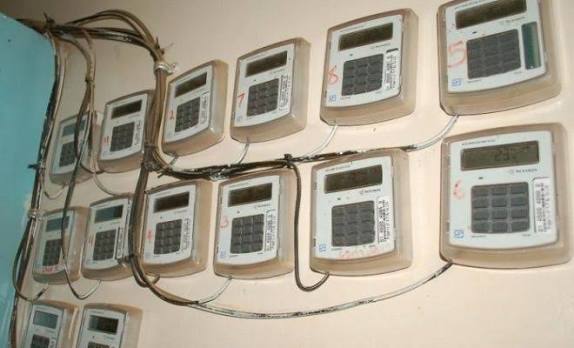
The KPLC bill is not just an energy charge.
It is a layered invoice made up of the base energy rate, Fuel Energy Cost Charge, Forex Adjustment, Rural Electrification Levy, ERC Levy, VAT and other applicable charges.
Together, these can mean that a school pays approximately KSh 20 to KSh 25 per unit all-in. The energy charge itself may account for less than half of the final amount.
A medium-sized boarding school with dormitories, a kitchen, a computer laboratory and water pumps can commonly pay:
KSh 100,000 to KSh 200,000 per month
That translates to:
KSh 1.2 million to KSh 2.4 million per year
And the cost rises whenever tariffs and associated charges increase.
Friends School Kamusinga in Bungoma County reported annual electricity costs of approximately KSh 4.3 million in 2024.
A school in Machakos was spending approximately KSh 150,000 per month.
These are not isolated examples. They illustrate the financial pressure many schools are facing.
“I sat down wondering how meagre funds will pay teachers, our cooks and security guards, pay our electricity bills and also buy food for students.”
— Kenyan school head teacher, on receiving term capitation
Why the Budget Cannot Absorb It
Public schools received approximately KSh 7,952 per student in capitation for the first term of 2026.
That allocation is expected to cover electricity, water, teaching materials, maintenance and many other operational costs.
For a school with 500 students, that works out to approximately:
KSh 3.97 million per term
If the school spends KSh 300,000 per month on electricity, a three-month term consumes:
KSh 900,000
That is nearly a quarter of the total capitation allocation before a single textbook, laboratory item or maintenance bill is paid.
The Auditor-General’s July 2025 report identified a significant capitation funding shortfall over several years.
Schools are therefore being asked to operate within tight budgets while essential operating costs continue to rise.
Private schools face a similar challenge.
Fee income must cover salaries, food, utilities, maintenance, learning materials, transport and infrastructure.
When electricity costs rise faster than school fees, administrators are forced to find savings elsewhere.
The electricity bill is not the only financial pressure schools face — but it is one of the costs schools can actively reduce.
What That Money Could Have Bought
The true cost of a high electricity bill is not only the amount appearing on the KPLC invoice.
It is what that money could have funded instead.
A school spending KSh 150,000 per month on electricity spends:
KSh 1.8 million per year
That amount could potentially fund:
- Additional teaching staff
- New textbooks
- Laboratory equipment
- ICT equipment
- CBC learning materials
- School feeding programmes
- Classroom or dormitory improvements
- Water infrastructure
At KSh 200,000 per month, annual electricity spending rises to:
KSh 2.4 million
Unlike investments in solar, laboratory equipment or infrastructure, money paid through the monthly electricity bill does not create an asset for the school.
It buys electricity for that billing period — and the school starts again the following month.
The Hidden Cost Goes Beyond the Budget
There is another cost that does not always appear on the school’s financial statements.
When administrators try to control electricity spending, they may begin limiting how and when power is used.
Computer laboratories may close earlier.
Science practicals requiring powered equipment may be restricted.
Dormitory lighting hours may be shortened.
Water pumping may be delayed.
ICT equipment may remain unused to avoid increasing the electricity bill.
Under CBC, reliable access to electricity increasingly supports digital learning, science, research and technology-enabled teaching.
So while the financial cost appears on the spreadsheet, the educational cost can eventually affect students.
Why Electricity Costs Are Difficult to Predict
A school’s electricity bill is affected by more than its actual electricity consumption.
KPLC bills can include charges linked to:
- Fuel costs
- Foreign exchange movements
- Taxes
- Levies
- Tariff adjustments
- Changes in national generation and transmission costs
This means a school can reduce consumption and still face fluctuations in the final bill.
For administrators preparing annual budgets, unpredictable electricity costs make financial planning difficult.
That is why more schools are looking for ways to control the amount of electricity they purchase from the grid instead of relying entirely on future tariff movements.
What the Schools That Solved It Did
Some Kenyan schools have already taken a different approach.
Instead of treating the electricity bill as a permanent operating cost, they treated it as a problem that could be solved.
Friends School Kamusinga
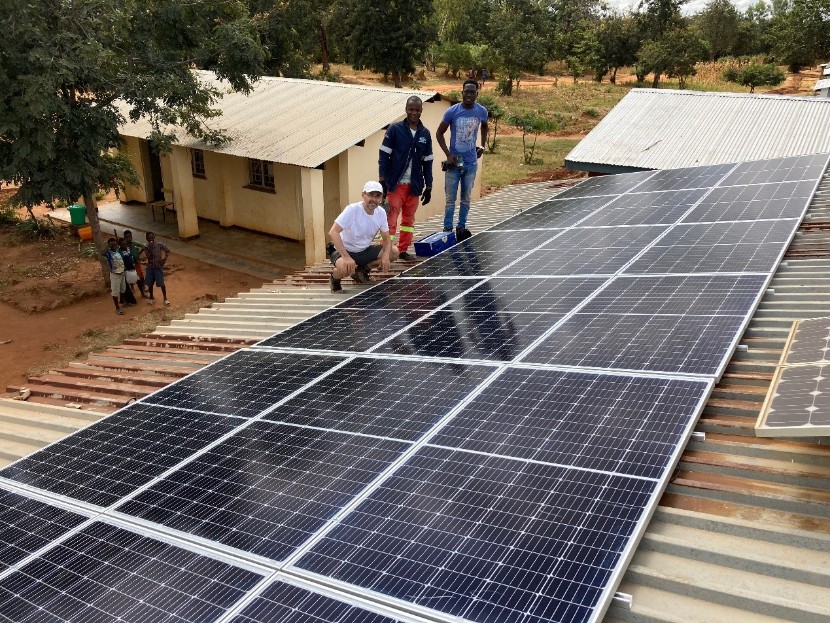
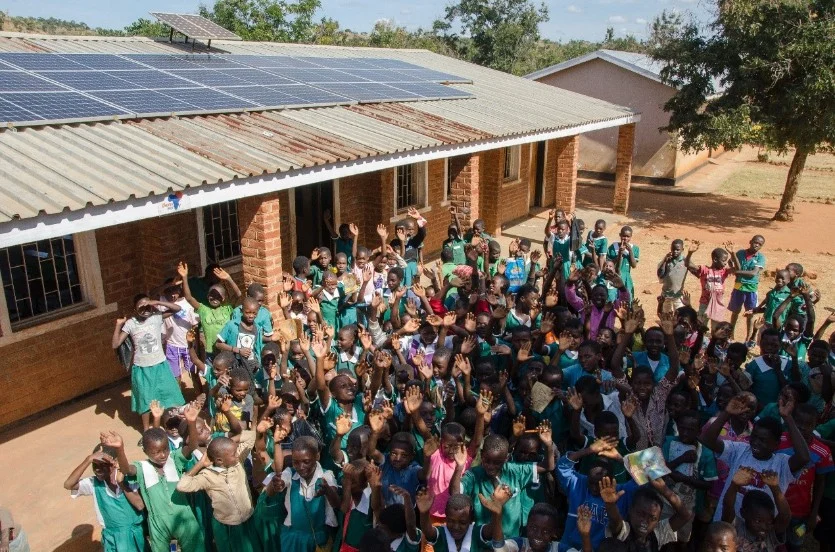
Friends School Kamusinga installed a hybrid solar energy system in February 2025.
The school had previously reported electricity costs of approximately:
KSh 4.3 million per year
After the installation, energy costs reportedly dropped by nearly:
80%
The reduction in grid dependence also meant less reliance on backup generators and more predictable access to electricity.
Savings could then be redirected towards academic resources and infrastructure.
Ndima Kanini Academy
Ndima Kanini Academy in Karatina had reportedly been spending approximately:
KSh 240,000 per month on electricity and fuel
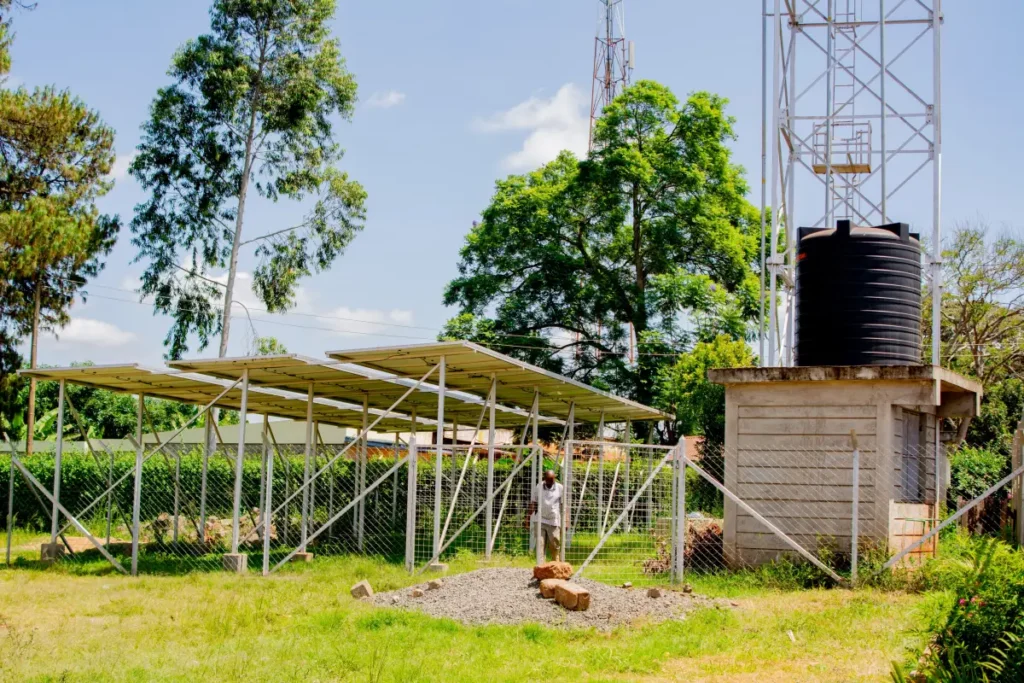
Through clean-energy financing, the school installed a solar energy system consisting of approximately 71 solar panels, with the project valued at around KSh 4 million.
The project significantly reduced the school’s ongoing energy costs.
Instead of directing the full monthly amount to electricity and fuel, part of the previous energy budget could be redirected towards financing an asset that would continue generating electricity for many years.
A Machakos School Example
A secondary school in Machakos spending approximately:
KSh 150,000 per month
reduced its grid electricity bill significantly after installing a solar system with battery storage.
A 60% reduction would represent monthly savings of approximately:
KSh 90,000
Annual saving:
KSh 1.08 million
That is money that can be redirected towards textbooks, laboratories, teachers, infrastructure and other school priorities.
The important point is not that every school has exactly the same numbers.
Every school has a different load profile, electricity bill, operating schedule and energy requirement.
The important point is that the electricity bill can be analysed, reduced and converted into a more predictable long-term energy cost.
The Maths for a Medium Boarding School
Consider a school currently paying:
KSh 120,000 per month to KPLC
A potential financed solar scenario might look like this:
| Item | Amount |
|---|---|
| Current monthly KPLC bill | KSh 120,000 |
| Example solar system cost | KSh 2,800,000 |
| Example monthly loan repayment | Approx. KSh 47,000 |
| Residual KPLC bill after solar | Approx. KSh 18,000 |
| Total monthly energy-related outgoing | Approx. KSh 65,000 |
| Monthly saving | Approx. KSh 55,000 |
| Year 1 saving | Approx. KSh 660,000 |
Before solar:
KSh 120,000 per month
After solar and financing:
Approx. KSh 65,000 per month
Potential saving from the first month:
Approx. KSh 55,000
Once the financing term is completed, the school retains the solar system and the monthly repayment ends.
At that point, the financial benefit becomes substantially larger.
The exact numbers will depend on the school’s actual electricity consumption, system size, financing structure and KPLC usage after solar installation.
That is why an energy audit should always come before the final proposal.
What Waterlift Solar Does for Schools With High KPLC Bills
✓ Free school energy audit — we review your bills, energy consumption and site requirements.
✓ Financial savings projection — showing the potential monthly and annual savings before you invest.
✓ Custom solar system design — based on your school’s actual electricity consumption.
✓ KCB Clean Energy financing options for qualifying schools.
✓ Lease-to-own arrangements for schools that prefer an alternative financing model.
✓ Solar water heating systems to reduce electricity used for heating water.
✓ Solar borehole pumping systems to reduce electricity used for water pumping.
✓ Hybrid solar PV and battery systems designed around the school’s operating requirements.
✓ Professional installation, monitoring and after-sales support.
✓ Nationwide project support.
This Is a Problem You Can Actually Solve
School administrators cannot directly control national capitation levels.
They cannot control inflation.
They cannot control electricity tariffs.
They cannot control foreign exchange adjustments.
But they can control how much electricity the school continues buying from the grid.
That is what makes energy different from many of the other financial pressures facing schools.
With a properly designed solar system, schools can reduce their grid electricity consumption significantly while making monthly energy costs more predictable.
Where financing is available, the school can spread the cost of the investment over several years instead of paying for the entire system upfront.
The objective is simple:
Replace a large and unpredictable monthly electricity expense with a lower, more predictable energy cost while building an asset the school ultimately owns.
Every month without an energy plan is another month in which money that could support teaching, learning and infrastructure is spent entirely on electricity.
Start with the numbers.
Stop Paying KPLC What Belongs in Your Classrooms
Book your free school energy audit today.
waterliftsolarsavings.africa
Waterlift Solar Limited
Kenafric Business Park, Baba Dogo, Nairobi
Branch: Nanyuki