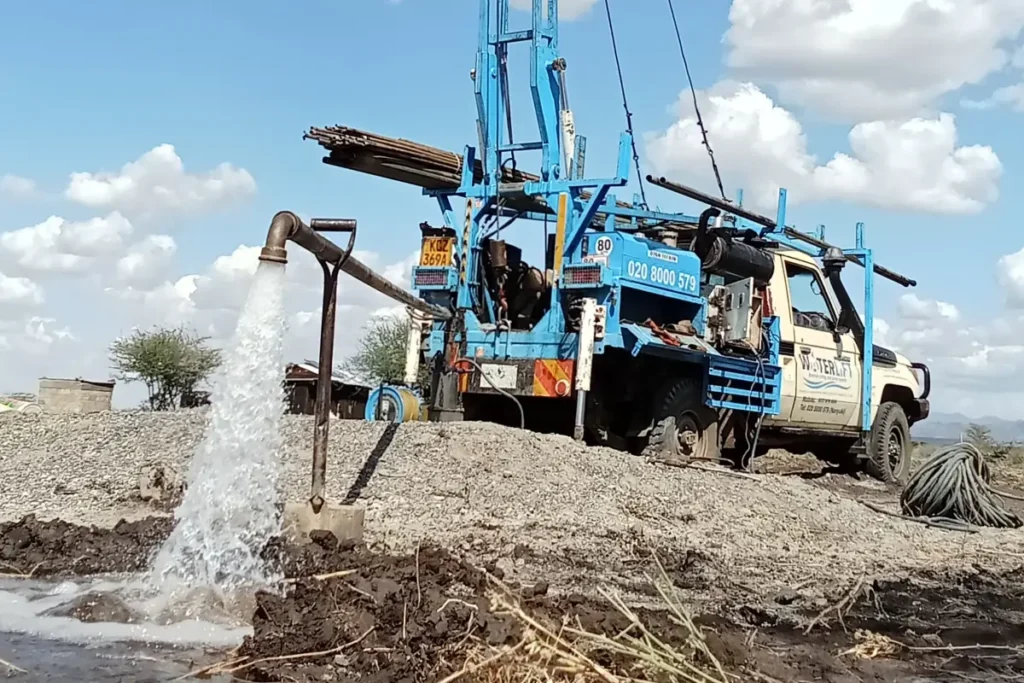
Drilling a borehole is only the beginning.
The real question is not “Did we find water?” It is “How much water can this borehole sustainably produce?”
This is where test pumping becomes critical. No professional borehole project should proceed to pump installation without proper test pumping.
What Is Test Pumping?
Test pumping is a controlled process used to determine the performance of a borehole and its aquifer.
It involves measuring:
– Discharge rate (yield)
– Water level drawdown
– Recovery rate
– Aquifer response over time
Why Striking Water Is Not Enough
Finding water does not guarantee adequate yield or long-term sustainability. A borehole may produce water initially but fail under continuous pumping.
Without testing, installing a pump becomes a risk.
Types of Test Pumping
Step-Drawdown Test
The borehole is pumped at increasing discharge rates to determine its capacity and efficiency.
Constant Rate Test
The borehole is pumped at a fixed rate over an extended period to assess sustainability.
Recovery Test
Water levels are monitored after pumping stops to determine recharge capability.
Key Parameters Determined
– Sustainable yield
– Drawdown levels
– Borehole efficiency
– Aquifer characteristics
Why Test Pumping Is Critical
Proper Pump Sizing
Ensures the pump matches the borehole capacity.
Preventing Borehole Failure
Avoids over-pumping, collapse, and sand intrusion.
Solar System Design
Helps size solar pumps, panels, and storage systems accurately.
Regulatory Compliance
Supports requirements for abstraction permits.
Consequences of Skipping Test Pumping
Skipping this step can lead to pump failure, inconsistent water supply, sand contamination, and expensive repairs.
Conclusion
Drilling tells you where water is. Test pumping tells you how much water you have.
With proper testing, you build a reliable and sustainable water system. Without it, you are operating on guesswork.